Maputo
- Introduction
- Official opening of the Seminar
- Presentation of the Universal Forum of Cultures � Barcelona 2004 and the International Congress on Cultural Rights and Human Development
- The role of culture in development
- ICTs and Community Development in Africa
- Conclusion of the Workshop on NEPAD and Culture
- Research Plan of OCPA
- Cultural Diversity and Human Development Indicators
- Human Rights and Human Development Indicators
- Human rights, culture and gender
- Cultural rights and human development in Africa
- Cultural policy in economic development: possible indicators
- Conclusions summary
- Cultural indicators of human development: research and action
Introduction
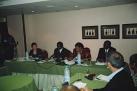
1. Within the Framework of the Universal Forum of Cultures, the Observatory of Cultural Policies in Africa (OCPA), the Interarts Foundation, UNESCO and the Forum Barcelona 2004 organised an International Seminar on Cultural Indicators of Human Development in Africa. The Seminar, held in Maputo on 3-5 March 2004, aimed at drawing a clearer picture on the understanding of the role of culture in development in the context of Africa. The principal objectives were to prepare the ground for the Congress on Cultural Rights and Human Development within the Universal Forum of Cultures Barcelona 2004 in August 2004, to initiate the OCPA research programme in this field and to contribute to the preparation of a regional consultation on culture and NEPAD (New Partnership for Afica�s Development). The overall objective of the Seminar was to reflect the linkage between cultural indicators of development, cultural rights and development in the respect of diversities.
2. The Seminar programme consisted of three days of presentations and debate on various themes concerning the current debate on the role of culture in development, the impact of development projects on cultural communities, the transformation of new approaches into indicators and action-research initiatives, the involvement of the cultural sector and its current challenges as regards the protection of cultural communities and its role as a bridge-builder in development initiatives, among other things. The meeting was expected to produce some central thoughts such as the importance of a research agenda and of connecting the international level with the everyday ground realities of civil society, as well as some concrete observations and suggestions on cultural indicators of development in Africa.
3. The following, non-exhaustive set of questions to be addressed during the international Seminar was proposed previously:
Which cultural indicators of development should be priority and how?
How is cultural citizenship recognised in the African context? How is cultural freedom/cultural democracy understood in the African context?
One main problem in developing indicators could be the access to infrastructures and knowledge-resource capacities. How could this issue be tackled?
It is clear that culture generates rights (such as economic ones). Nevertheless, to what extent can rights in general be presented within formal and specific declarations?
Is it possible to affirm that cultural indicators have universal validity? If not, what could be the alternative?
What sort of indicators does cultural diversity require?
How could culture and quality of life evaluation be developed in the African context?
4. With regard to specific thematic areas such as education and culture, creativity, access and participation and heritage, which are to be the subject of afternoon workshops within the Congress on Cultural Rights and Human Development, the following questions were suggested:
What are the key flashpoints in these thematic areas in Africa?
What successful policies can be identified?
What indicators exist and should exist in the African context?
What examples of best practice can be named?
5. The programme was designed with the idea of encouraging exchange of ideas and giving space to debate. The first day of the Seminar was devoted to the general presentation and discussion on culture and development issues and assessments. The second day moved more profoundly towards the dimensions of development and cultural-rights related issues in the African context. The third day was used to present a set of conclusions, convergences and concrete results and a list of topics for the follow-up, including a research agenda and a set of items for the International Congress on Cultural Rights and Human Development.
6. 18 participants were invited to take part in the Seminar. 21 local observers included representatives of cultural organisations in Mozambique and international agencies based in the country, as well as several journalists and diplomats.1
7. This report presents the main subjects under discussion over the three days of the Seminar.
Top
Available downloads:
Maputo - seminar report - definitive version
April 2007
Download